Get flat 10% off, Use code FLAT10

Mitra Lābha: The Second Tantra of Panchatantra
Mitra Lābha, the second Tantra of Panchatantra, teaches the power of friendship, unity, and cooperation through simple yet meaningful stories.
PANCHATANTRA STORIES
2/11/20265 min read
Introduction to Mitra Lābha
The Gaining of Friends
After understanding how friendships can be broken in Mitra Bheda, the Panchatantra now guides us toward a brighter and more hopeful path through its Second Tantra—Mitra Lābha, which means the gaining of friends. This section teaches the value of friendship, cooperation, and unity, showing how even the weakest can overcome great dangers when they stand together. Through simple animal stories and practical situations, Mitra Lābha reminds us that true strength lies not in size or power, but in trust, teamwork, and wise alliances. Let us begin this journey with the first and most important story of Mitra Lābha, which sets the foundation for all that follows.
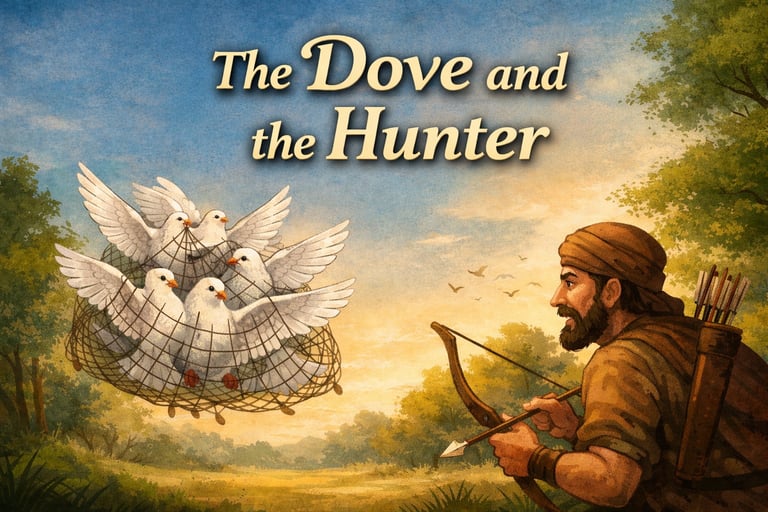
Story 1: The Dove and the Hunter
(Kapota–Vyādha Kathā- (कपोत–व्याध कथा)
In a peaceful forest near a wide open field lived a large group of doves. They were gentle birds who spent their days flying together, searching for grains, and resting on tall trees. Among them was a wise and experienced dove, whom all the others respected as their leader. He guided the flock with calm thinking and thoughtful decisions.
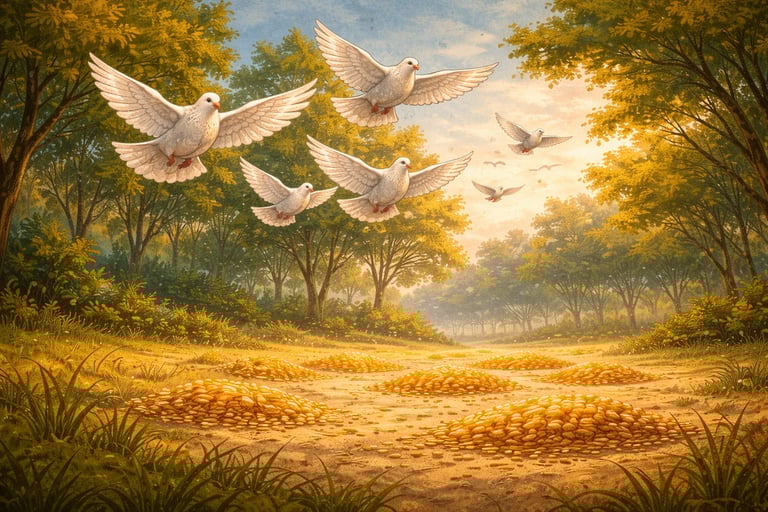
One morning, as the sun rose brightly, the doves flew out together in search of food. After flying for a long time, they spotted a field filled with grains scattered across the ground.
“How fortunate we are today!” cried one young dove joyfully.
But the wise leader noticed something unusual. The grains were spread too neatly, and the field looked strangely quiet.
“This feels dangerous,” he warned. “Let us be careful.”
However, hunger clouded the minds of the younger doves. Ignoring the warning, they swooped down eagerly. The moment they landed, a hidden net rose from the ground and trapped them all.
The doves panicked.
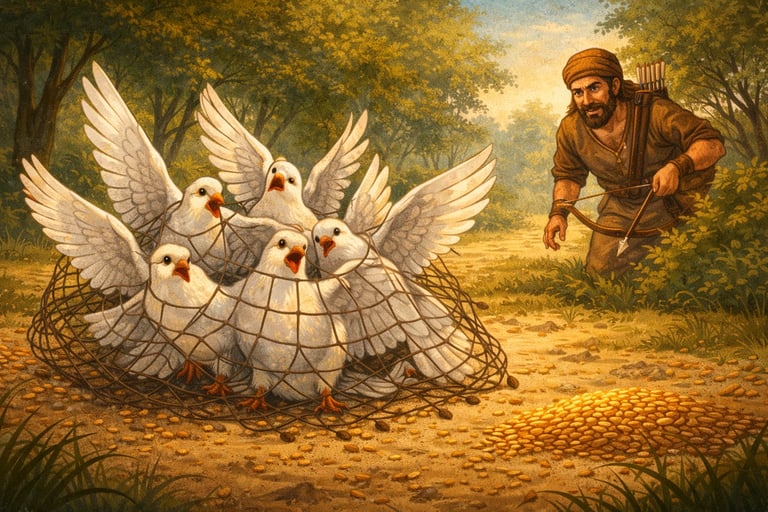
“What shall we do now?” they cried. “We are caught!”
At that moment, a hunter emerged from behind the bushes, smiling wickedly as he walked toward the trapped birds.
The leader dove spoke firmly,
“Do not panic. Struggling alone will only make things worse. If we act together, we can escape.”
“But how?” asked the frightened doves.
“We will fly together, lifting the net as one,” said the leader. “Only unity can save us.”
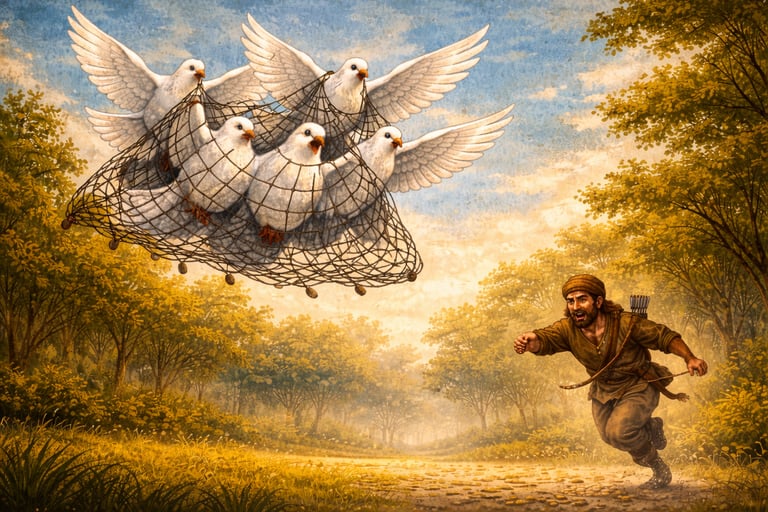
Trusting their leader, the doves began flapping their wings at the same time.
To the hunter’s great surprise, the entire flock rose into the air—net and all—and flew away together.
The hunter shouted and ran after them, but he soon grew tired and gave up.
The doves flew far and safely landed near the home of a mouse, who was an old and trusted friend of their leader.
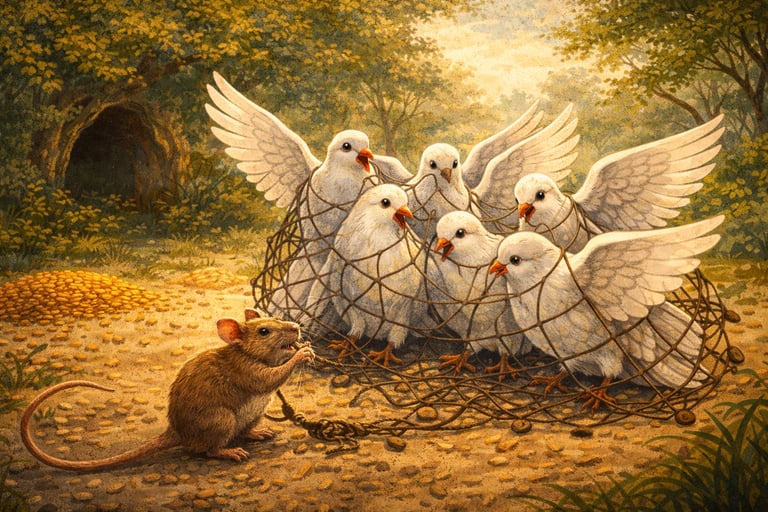
The leader replied gently,
“No, my friend. Free the others first. I can wait.”
Touched by this selfless act, the mouse quickly began gnawing the net, starting with the other doves.
Soon, every bird was free—including the leader at last.
The doves thanked the mouse with gratitude and joy.
“Friend,” said the leader dove respectfully, “we are in trouble. Please help us.”
The mouse examined the net carefully and said,
“I will free you all—but first, let me free the leader.”
As they flew back toward their forest, the leader said,
“Remember this day. Hunger and fear nearly destroyed us, but unity, trust, and friendship saved us.”
From that day onward, the doves listened carefully to wise advice and never forgot the power of standing together.
Moral of the Story
Unity is strength.
True friendship and cooperation can overcome even the greatest danger.
After learning how unity saved the doves from danger, the Panchatantra continues to teach us an equally powerful lesson—true friendship is not decided by size, strength, or appearance, but by trust and mutual respect.
This story from Mitra Lābha shows how an unlikely friendship between a crow and a mouse becomes the foundation of cooperation and survival.
Story 2: The Mouse and the Crow
(Hiraṇyaka–Laghupatanaka Kathā - हिरण्यक–लघुपतनक कथा |)
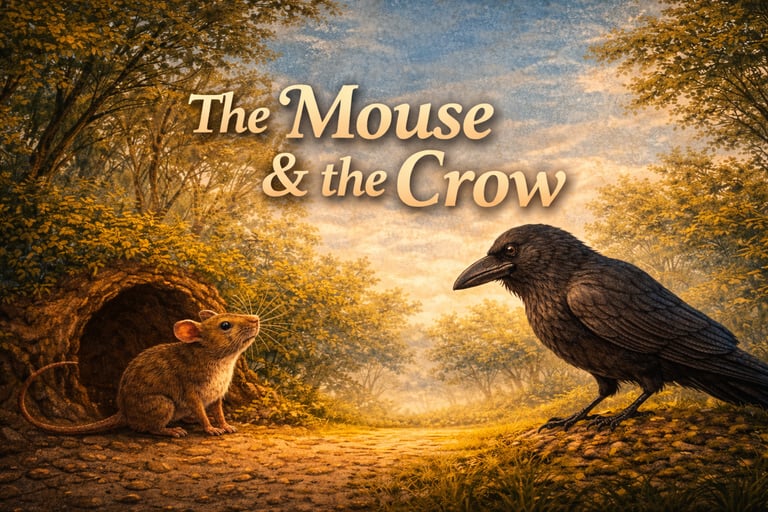
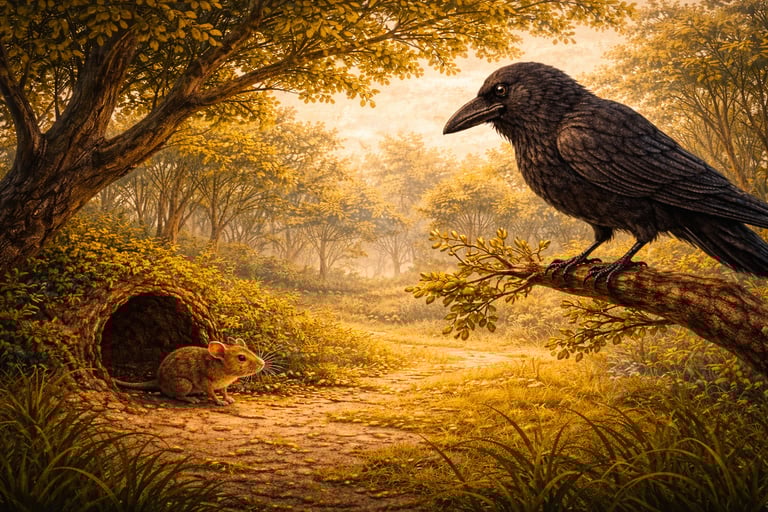
In a peaceful forest lived a clever crow named Laghupatanaka. He was sharp-eyed, thoughtful, and always alert to danger. From the tall branches of trees, he observed the world below, learning from every movement he saw.
Not far from that forest lived a mouse named Hiraṇyaka, who stayed inside a deep hole near a field. He was intelligent and cautious, but also lonely. Every night, he secretly came out to collect grains dropped by farmers, carefully storing them inside his hole.
One day, while flying low in search of food, Laghupatanaka noticed Hiraṇyaka carrying grains swiftly into his hole.
Curious, the crow perched nearby and began observing him daily. Over time, admiration replaced curiosity.
One morning, the crow spoke gently,
“Friend, I have watched you for many days.
You are wise and hardworking. I wish to be your friend.”
The crow smiled calmly.
“True friendship is built on trust, not appearances. I seek no benefit—only companionship.”
Still suspicious, the mouse refused. But the crow did not force friendship. Day after day, he returned, speaking kindly, never trying to enter the mouse’s hole or trick him. Slowly, Hiraṇyaka’s fear faded.
Finally, the mouse said,
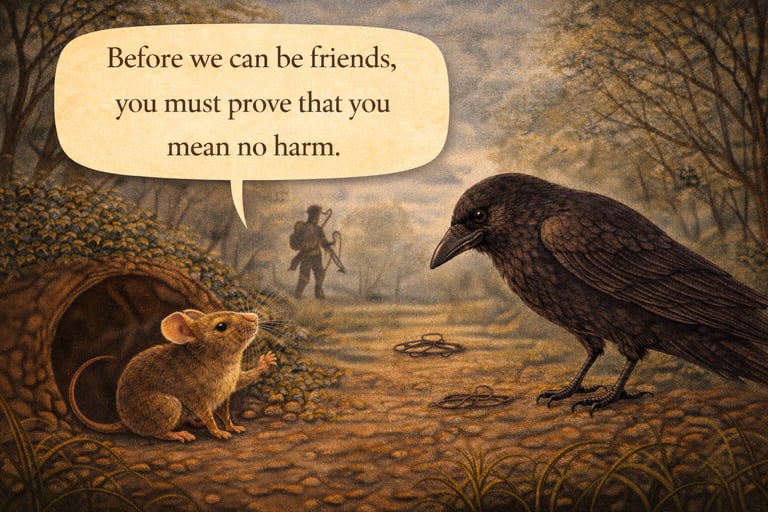
“If you truly wish to be my friend, keep your distance and respect my safety.”
The crow happily agreed.
The crow, flying above, saw the traps clearly. He immediately warned the mouse.
“You are in danger. Hunters have come.”
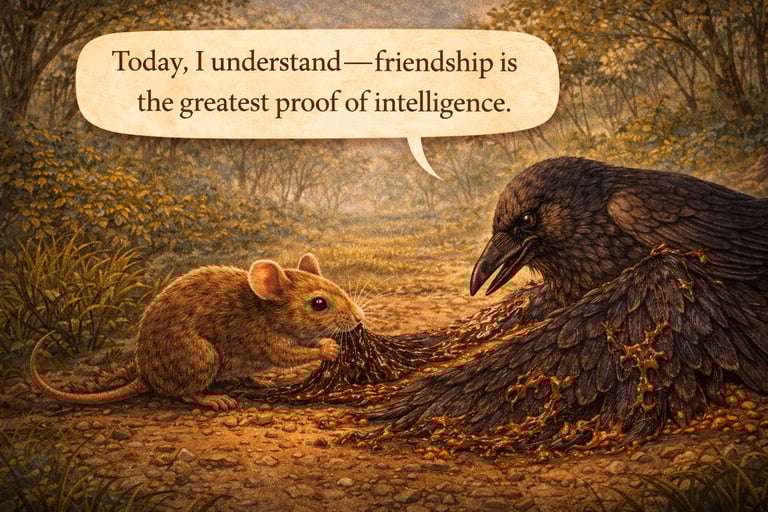
Thanks to the crow’s warning, the mouse stayed hidden. In return, when the crow once got stuck in sticky resin placed by villagers to catch birds, Hiraṇyaka gnawed the hardened resin patiently until his friend was free.
Grateful, the crow said,
“Today, I understand—friendship is the greatest proof of intelligence.”
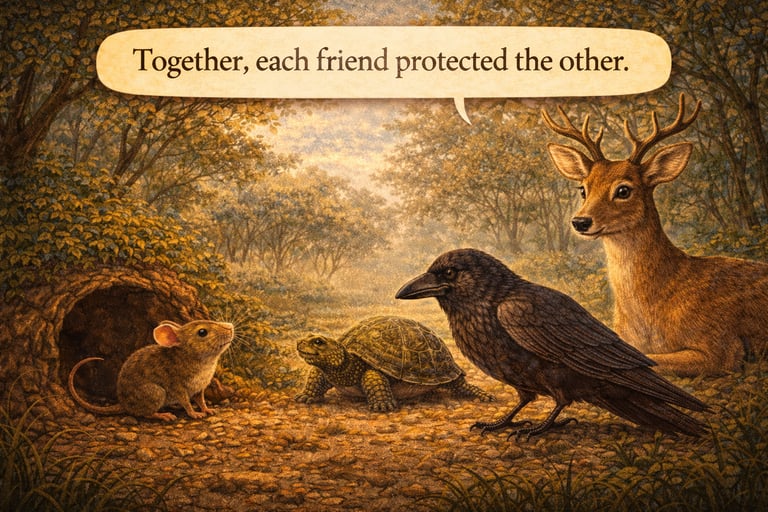
Later, their bond attracted others—a deer and a tortoise—forming a group where each friend protected the other. Together, they survived dangers that none could face alone.
Moral of the Story
True friendship is built on trust, patience, and mutual help.
When friends unite, even the weakest can overcome the strongest dangers.
The mouse immediately became alert.
“A crow and a mouse can never be friends,” Hiraṇyaka replied sharply.
“You fly in the open sky, and I live underground. Our lives are different. Also, I fear you may one day harm me.”
From that day, the two became friends. The crow shared stories of the forest, while the mouse shared grains and wisdom. Their friendship grew stronger with time.
One night, disaster struck.
A hunter laid traps around the field. When Hiraṇyaka came out, he noticed something was wrong. His instincts warned him. He quickly returned to his hole—but fear lingered.
Also read 'Panchatantra: The Timeless Indian Guide to Wisdom Through Stories': https://theorangecastle.com/panchatantra-the-timeless-indian-guide-to-wisdom-through-stories