Get flat 10% off, Use code FLAT10

Panchatantra Stories Part 3: The Crow’s Strategy & the Monkey’s Folly
In this third part of our Panchatantra series, we continue exploring the powerful wisdom of Mitra Bheda through two memorable stories—The Crow and the Snake and The Monkey and the Wedge.
PANCHATANTRA STORIES
2/5/20265 min read
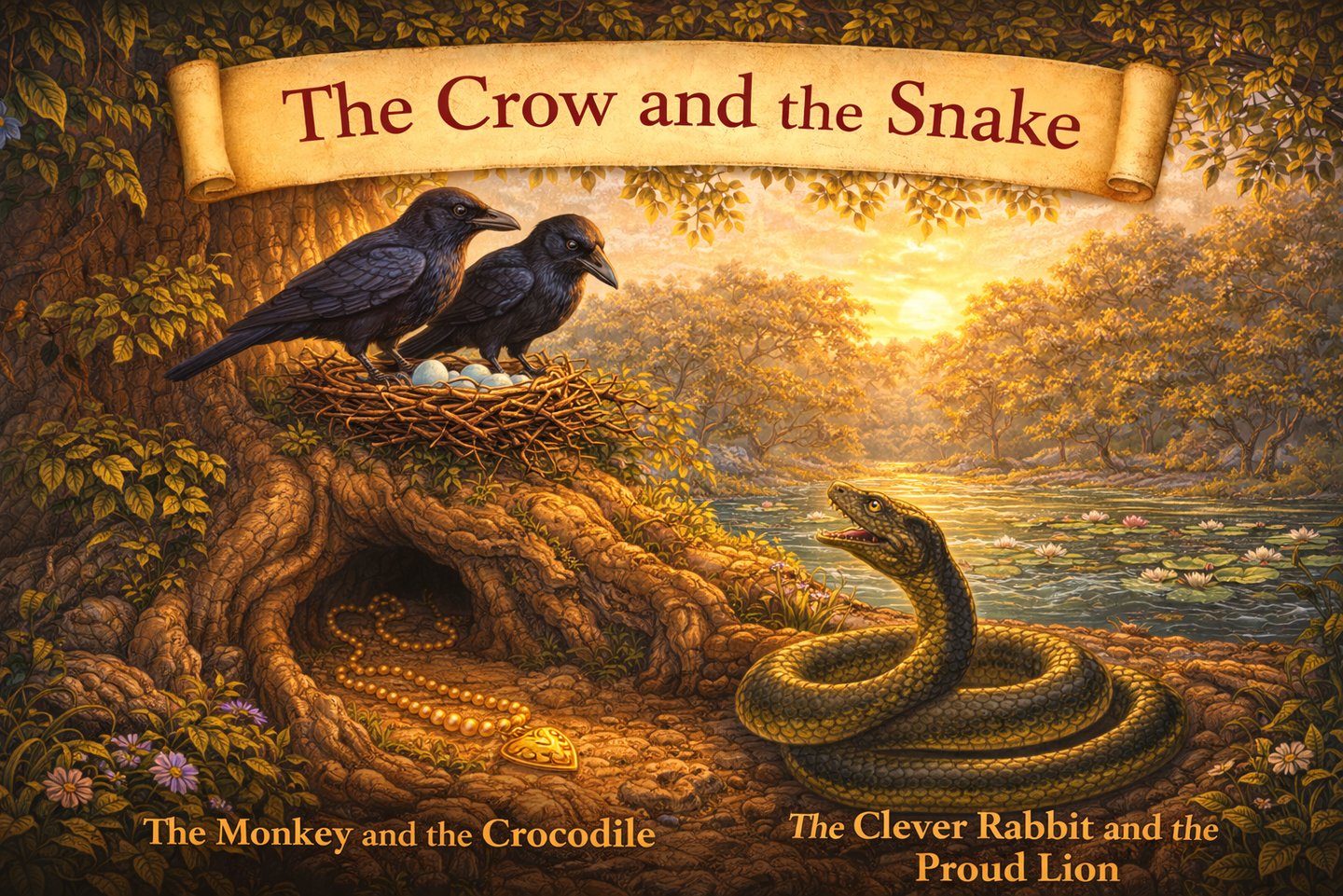
The Crow and the Snake
(Kāka–Sarpa Kathā - काक–सर्प कथा)
High on the branch of an ancient banyan tree lived a clever black crow with his mate. The tree stood beside a quiet village pond, and its thick branches gave shade to birds, animals, and travelers alike. For the crow couple, it was a peaceful home where each sunrise brought songs and each sunset brought rest.
But peace rarely lasts forever.
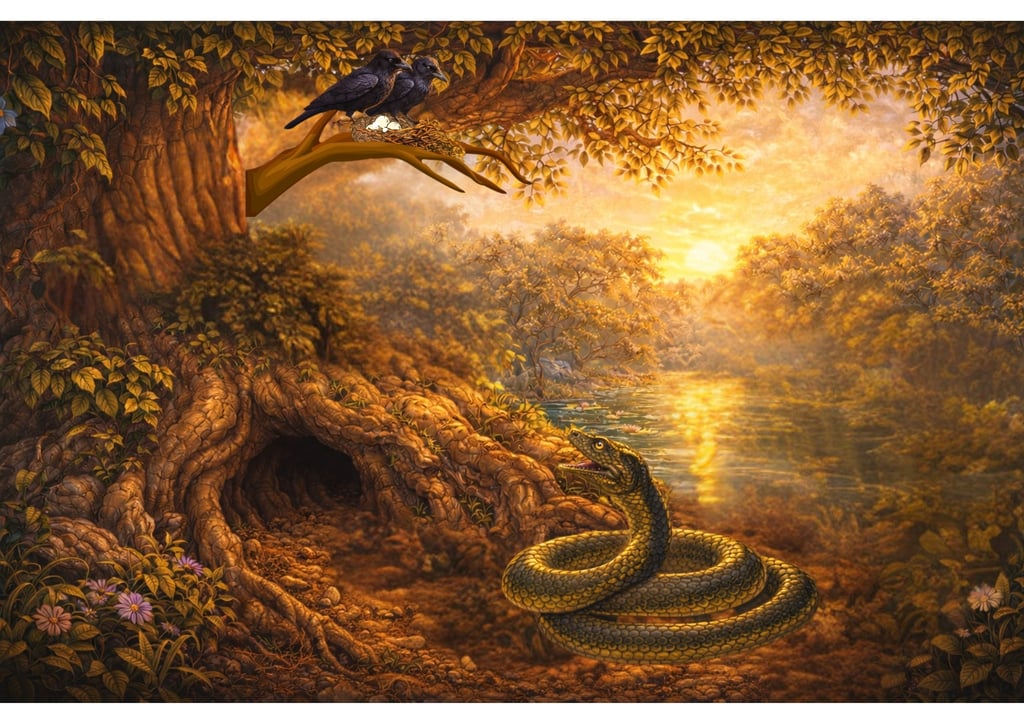

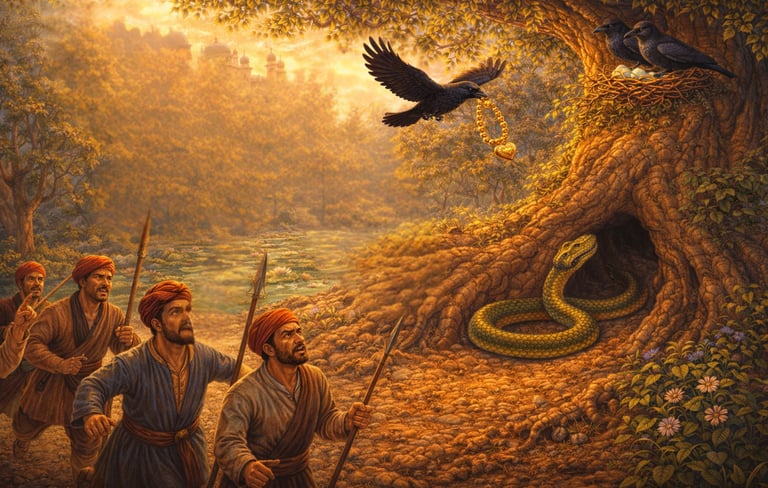
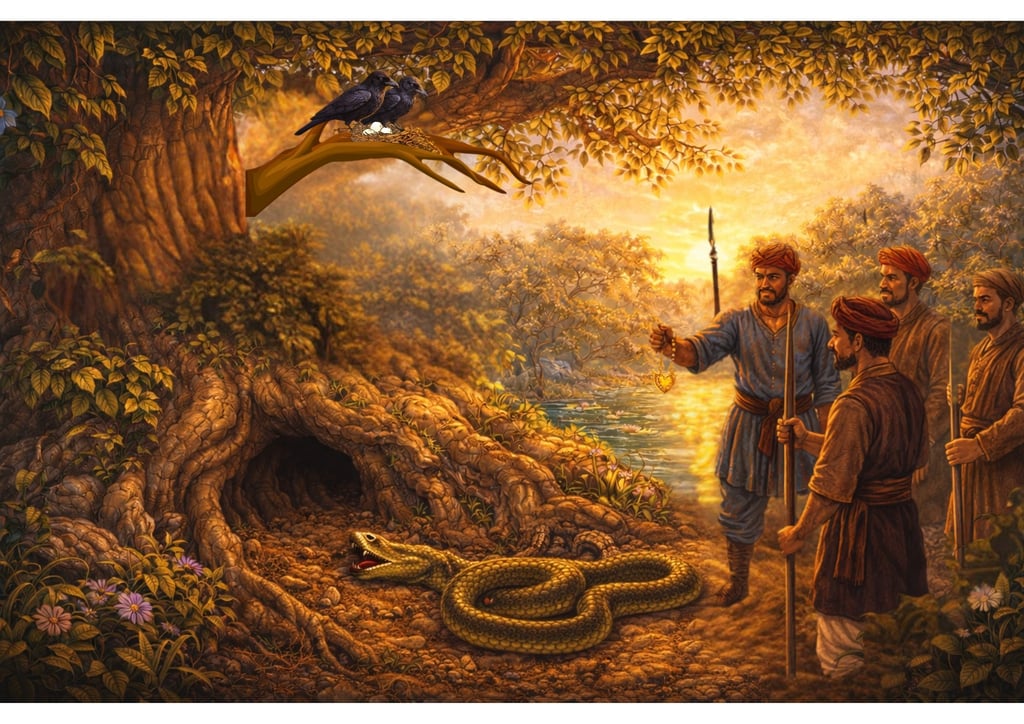
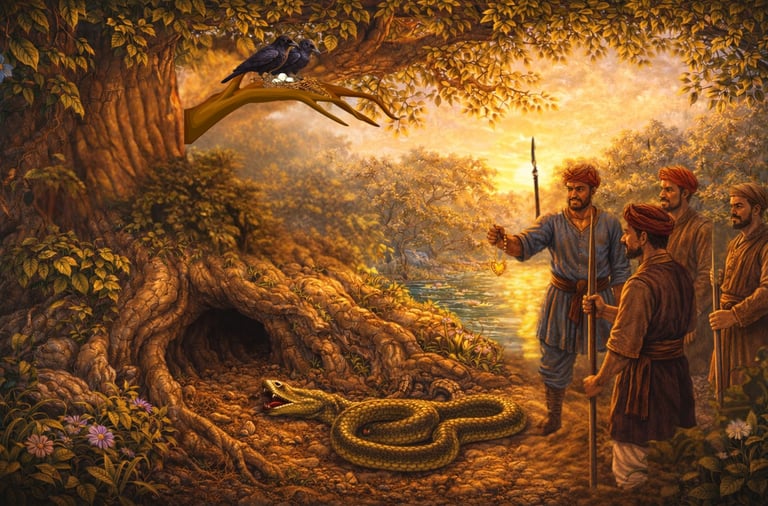
At the base of the banyan tree, hidden deep inside a hollow in the ground, lived a cruel and silent snake. Its body was long and dark, and its eyes gleamed with hunger. Every season, when the crow laid eggs in the nest, the snake would quietly crawl up the trunk, swallow the eggs, and return unseen to its hole.
The crow’s joy turned into sorrow.
Time after time, the crow’s mate wept as their eggs vanished. The crow grew angry and restless. He tried shouting at the snake, cawing loudly and flapping his
wings, but the snake remained unmoved. Strength and noise did nothing against a creature that struck silently.
“This enemy is powerful,” the crow said sadly, “but I must not fight him blindly. A weak bird cannot defeat a snake with force. I must defeat him with intelligence.”
Determined, the crow flew to the nearby pond where he met his old friend, a wise jackal who lived near the water.The crow bowed respectfully and said,
“Friend, sorrow has entered my life. A snake eats my eggs again and again. I am powerless before him. Please guide me.”
The jackal listened carefully and smiled.
“My friend,” he replied, “strength fails where intelligence succeeds. I shall tell you a way—but you must act patiently and wisely.” The jackal whispered a plan into the crow’s ear.
The next morning, as the sun rose, the crow flew toward the village. Near the riverbank, he noticed the king’s palace guards bathing and washing clothes. Nearby, the queen’s maid had placed the queen’s gold necklace, shining brightly in the sunlight.
The crow waited silently.
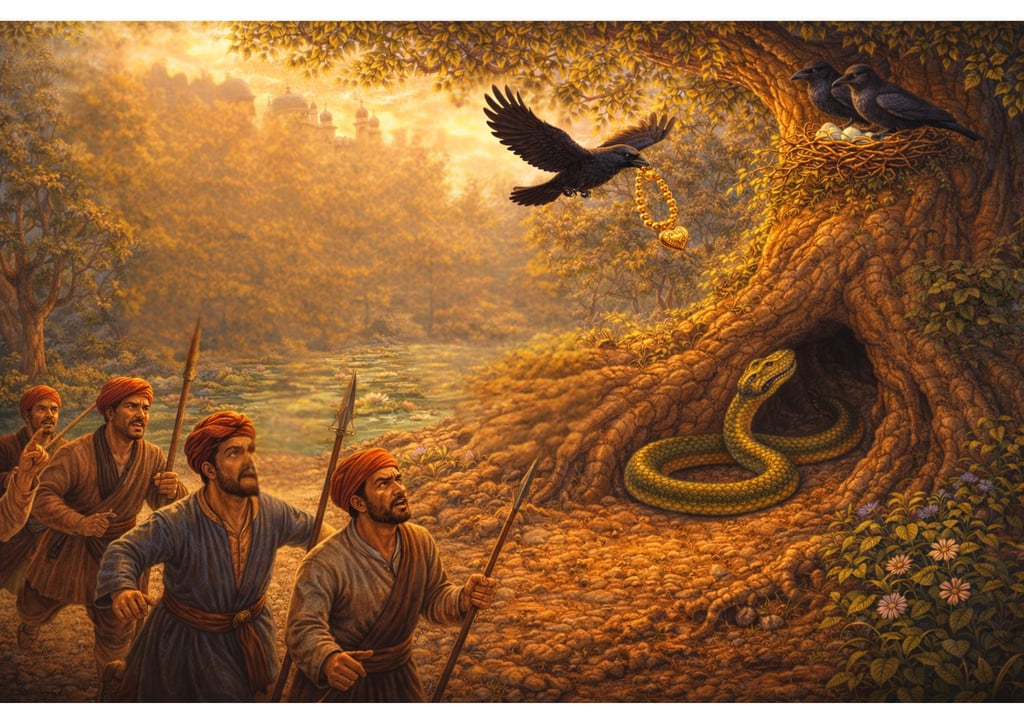
The moment the maid looked away, the crow swooped down, picked up the necklace in his beak, and flew off loudly cawing.
“Thief! Thief!” shouted the guards as they noticed the missing ornament. Without
delay, they chased the crow with sticks and spears. The crow flew just low enough for them to follow, leading them straight toward the banyan tree. Reaching the tree, the crow dropped the necklace directly into the snake’s hole and flew up to a high branch, watching quietly. The guards arrived moments later.
Seeing the necklace fall into the hollow, one guard shouted,
“A snake lives there! Kill it at once!”
The guards attacked the hole with sticks and stones. The snake, startled and furious, came out hissing—but it was no match for many armed men. Within moments, the cruel snake lay lifeless.
The guards recovered the necklace and returned to the palace, satisfied.
From the top of the banyan tree, the crow watched silently. His heart was calm, not joyful in revenge but peaceful in justice.
He flew back to his nest where his mate waited anxiously. “The danger is gone,” he said gently. “Our home is safe again.”
The crow’s mate rejoiced, and soon the nest was filled with new eggs—safe and protected.
The crow looked at the wide sky and thought,
“Anger clouds the mind, but wisdom lights the path. An enemy cannot always be defeated with power; sometimes, the sharpest weapon is intelligence.”
And so, through patience and clever thinking, the crow saved his family without direct conflict.
Moral of the Story
Intelligence and strategy can defeat even the strongest enemy.
Blind anger leads to destruction, but calm thinking leads to victory.
The Monkey and the Wedge
(Markaṭa–Kīlaka Kathā - मर्कट–कीलक कथा)
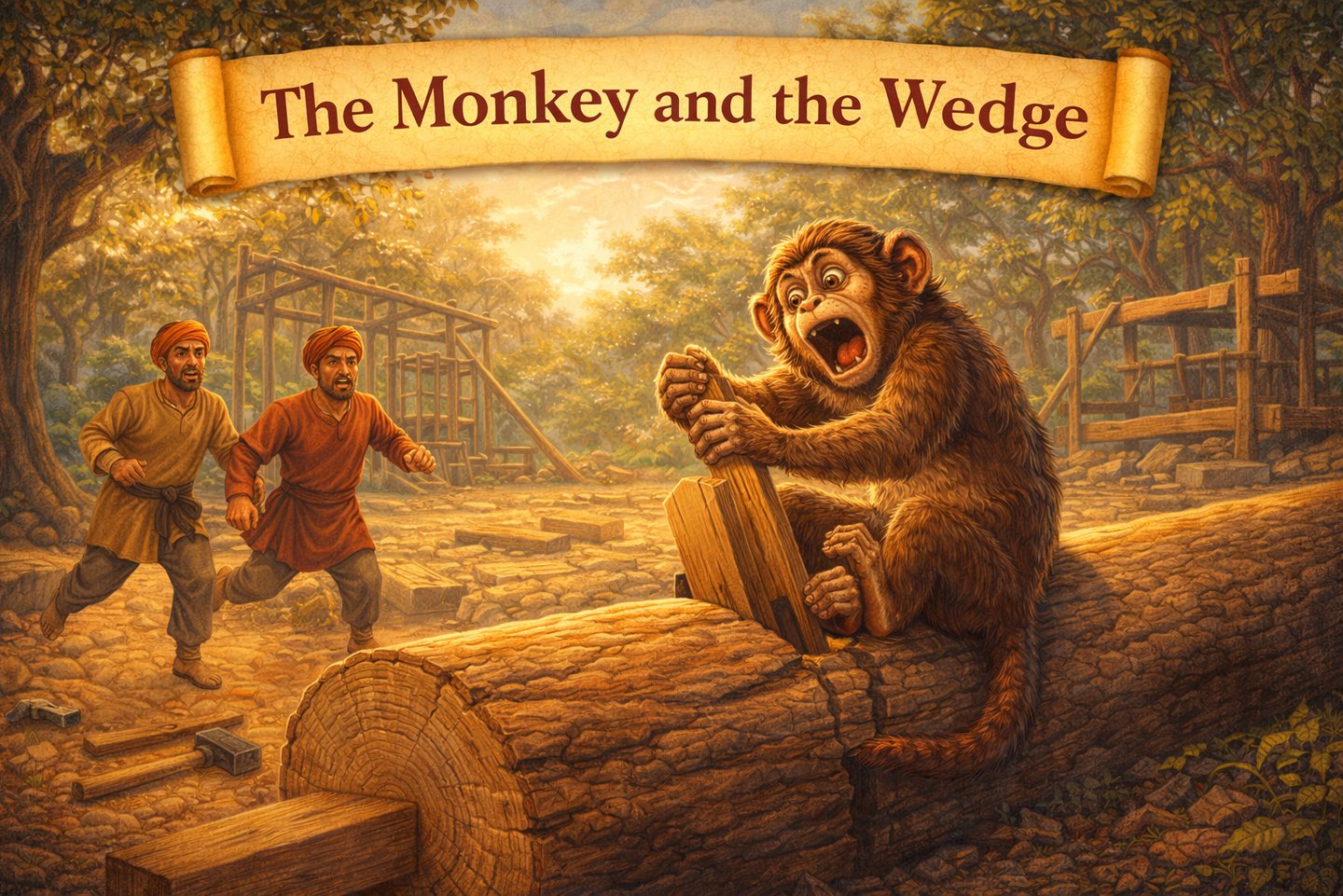
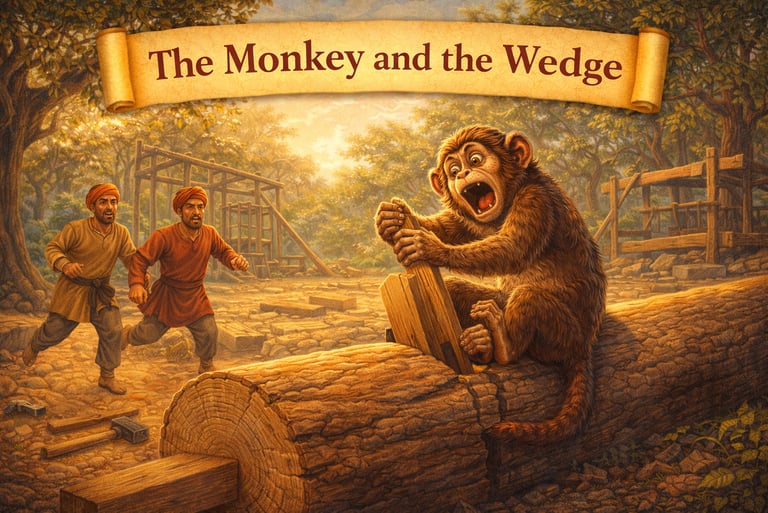
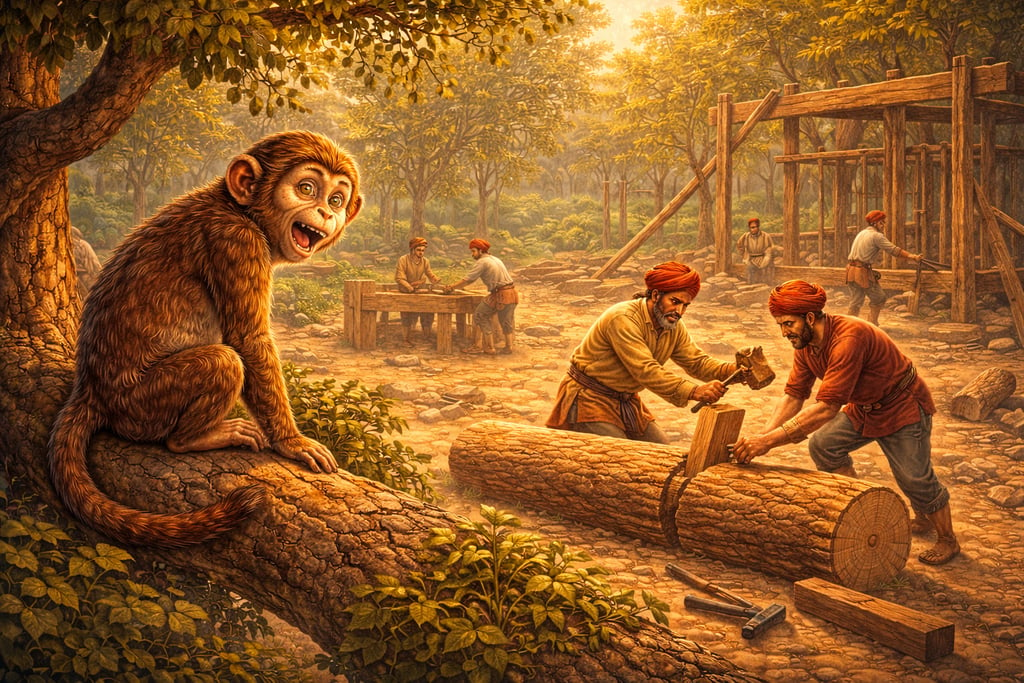
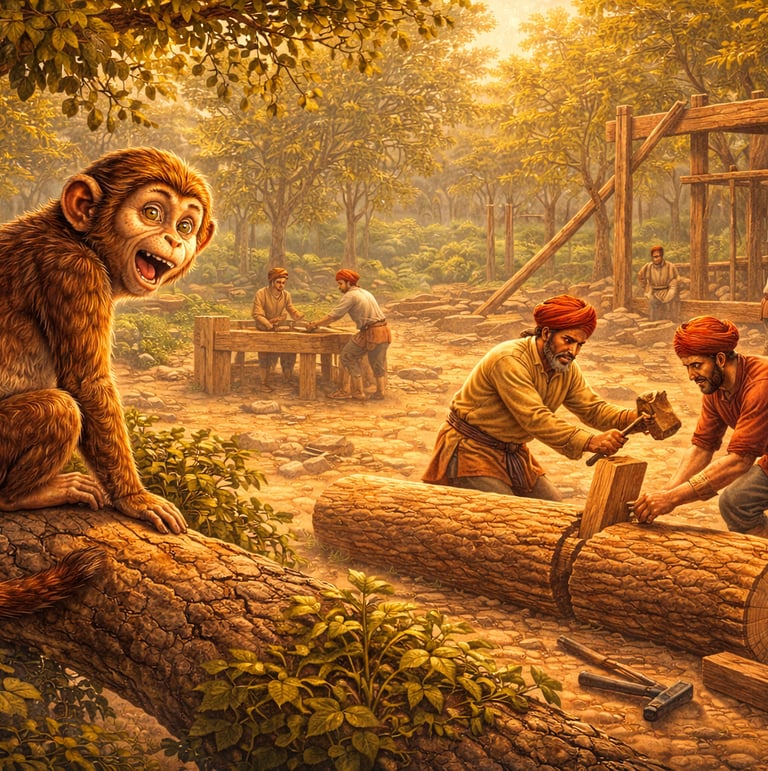
Once, in a quiet forest near a growing village, there lived a playful but foolish monkey. He spent his days jumping from tree to tree, watching the activities of humans with great curiosity. Though quick with his body, the monkey lacked patience and wisdom. He believed that knowing a little was enough to act wisely.
One sunny afternoon, the monkey noticed a group of carpenters working near the forest edge.
They were building a wooden shed using large logs and heavy tools. The rhythmic sound of sawing and hammering fascinated him.
Curious, he climbed down from his tree and sat on a nearby branch, watching them closely.
The carpenters were splitting a thick log. To do this, they inserted a wooden wedge into a narrow crack in the log.
Each strike of the hammer pushed the wedge deeper, slowly forcing the log apart. After some time, the carpenters took a break and went a little distance away to drink water, leaving their tools where they were.
The monkey’s eyes sparkled with excitement.
“What strange creatures humans are!” he thought. “They leave their work unfinished and walk away. Let me see what they are doing.”
Ignoring the quiet warning voice inside him, the monkey jumped down and approached the log. He circled it, touching the tools and sniffing them curiously. Soon, his attention was drawn to the wedge stuck firmly inside the log.
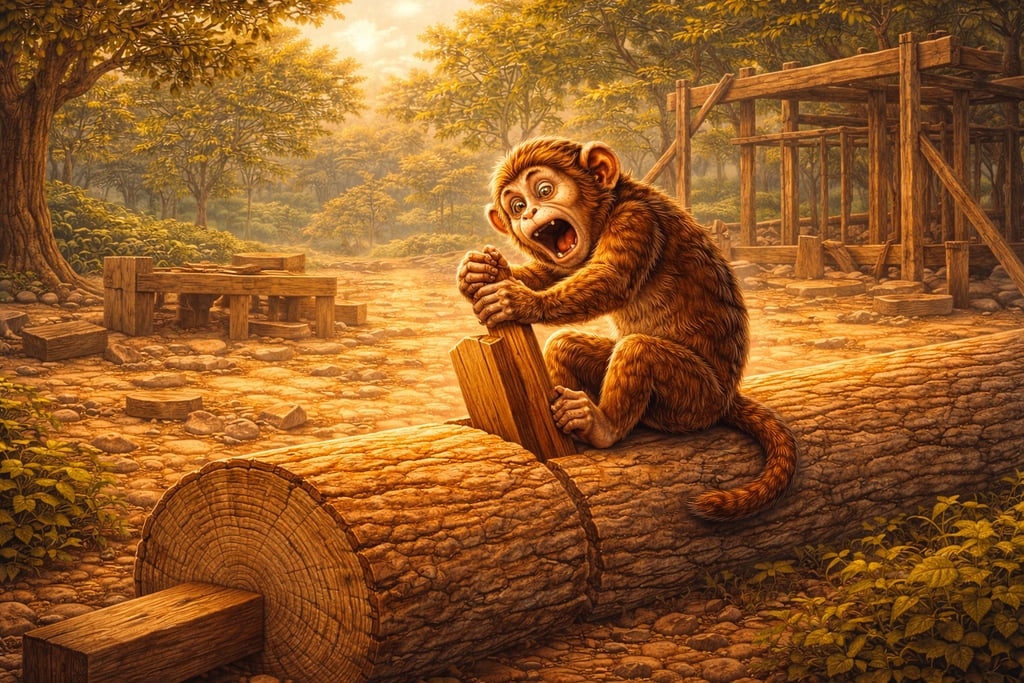
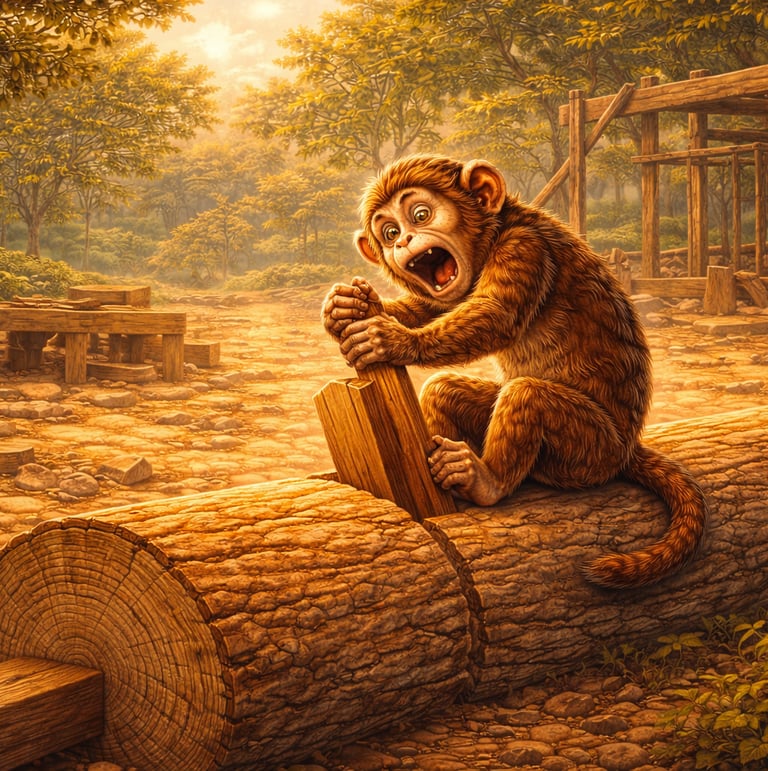
“This small piece of wood is holding such a big log apart?” he wondered. “How clever! But what will happen if I pull it out?”
Without thinking of the danger, the monkey sat on the log, placing his legs on either side of the crack. Using both hands, he grabbed the wedge and tugged at it with all his strength.
With a sudden jerk, the wedge came out.
In an instant, the heavy log snapped shut. The monkey screamed in pain as the log crushed his tail tightly between its halves.
He struggled and cried, but the more he moved, the more it hurt. His curiosity had turned into suffering.
Hearing the monkey’s cries, the carpenters rushed back. Seeing what had happened, they shook their heads in pity.
“This is the result of interfering in work you do not understand,” said one carpenter.
The carpenters carefully freed the monkey, but his tail was badly injured. Ashamed and in pain, the monkey limped back into the forest, wiser but wounded. As he sat quietly on a tree branch that evening, the monkey reflected on his mistake.
“I wanted to act smart,” he thought, “but I did not understand the situation. Curiosity without wisdom leads to trouble.”
From that day on, the monkey learned to observe quietly and avoid interfering in matters beyond his understanding.
Moral of the Story
Never interfere in things you do not understand.
Half-knowledge is more dangerous than ignorance.
Also read 'Panchatantra: The Timeless Indian Guide to Wisdom Through Stories': https://theorangecastle.com/panchatantra-the-timeless-indian-guide-to-wisdom-through-stories