Get flat 10% off, Use code FLAT10
Panchatantra Stories Part 4: The Final Chapter of Mitra Bheda
The Jackal and the Drum and The Heron and the Crab. These timeless tales bring together all the core lessons of Mitra Bheda, showing how fear, deception, and blind trust can lead to loss, while wisdom, observation, and courage restore balance.
PANCHATANTRA STORIES
2/9/20265 min read
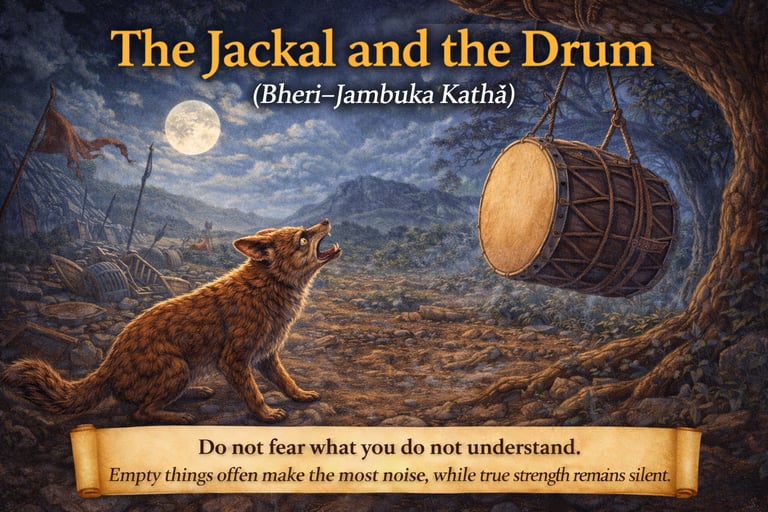
Story 6: The Jackal and the Drum
(Bherī -Jambuka Kathā - भेरी–जम्बुक कथा)
Once upon a time, near a quiet village surrounded by open fields and scattered trees, there lived a timid jackal.
Though clever by nature, this jackal was also easily frightened. He often imagined danger where there was none and trusted his fear more than his thinking.
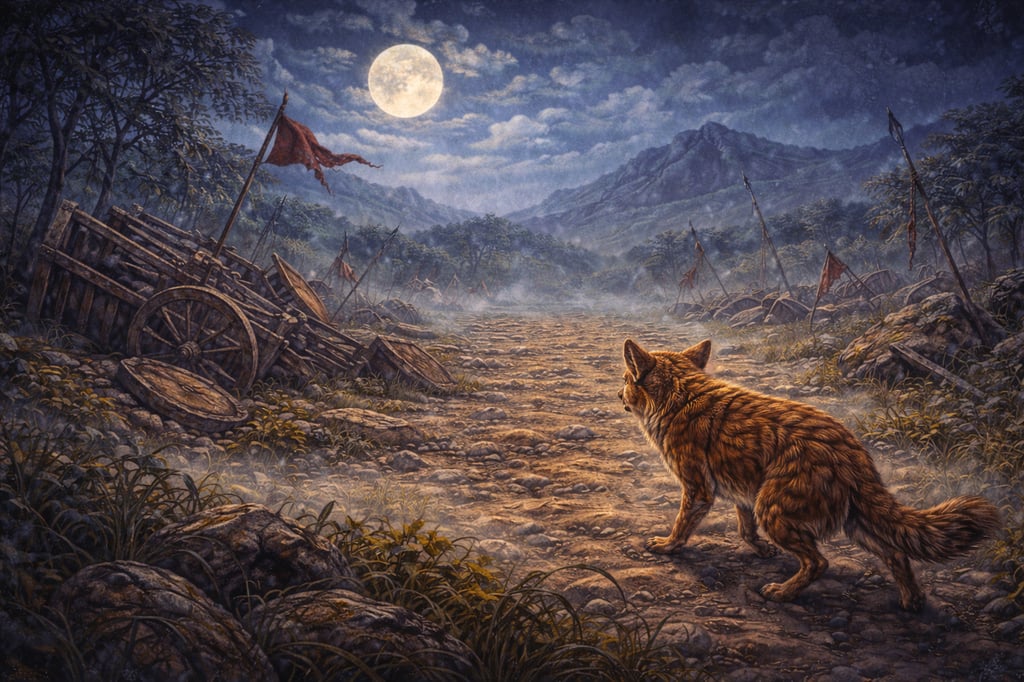
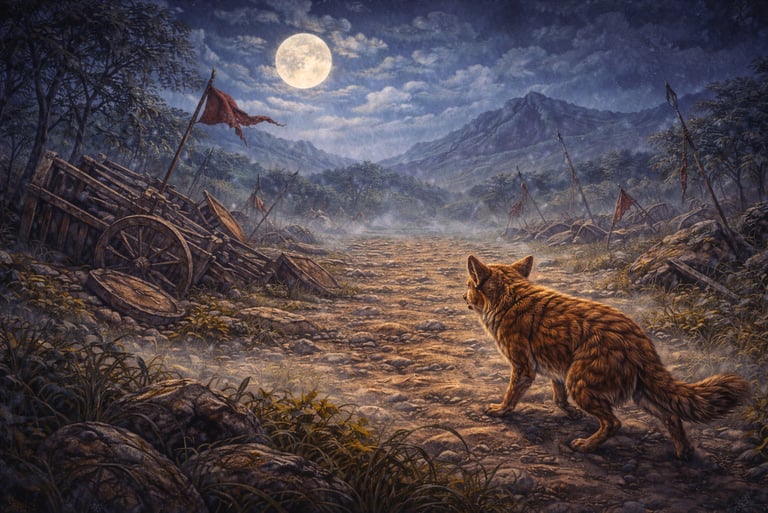
One night, while wandering in search of food, the jackal came across an abandoned battlefield on the outskirts of the village.
Broken carts, torn flags, and scattered tools lay silently under the moonlight.
The place felt eerie, and the jackal hesitated before stepping forward.
Suddenly, the wind began to blow.
With every strong gust, a deep, booming sound echoed through the empty field—
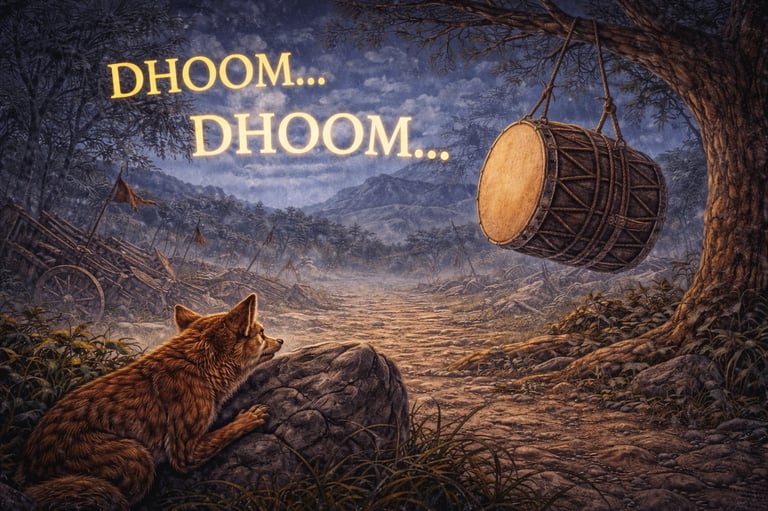
Dhoom… Dhoom…
The jackal froze.
“What terrifying creature lives here?” he thought. “This sound must belong to a giant beast!”
Before he could step forward, he heard the again!
Dhoom… Dhoom…
His heart pounded with fear, and he hid behind a bush. As the wind grew stronger, the sound became louder and more frightening. The jackal trembled all night, too scared to move.
“Such a loud drum must contain something valuable inside,” he thought. “Perhaps food or treasure.”
Driven by greed and imagination, the jackal began biting and scratching the drum. He tore it open with great effort—only to find nothing but empty space.
Disappointed but still hopeful, the jackal reasoned,
“If the sound was so powerful, surely the inside must be delicious!”
But there was nothing.
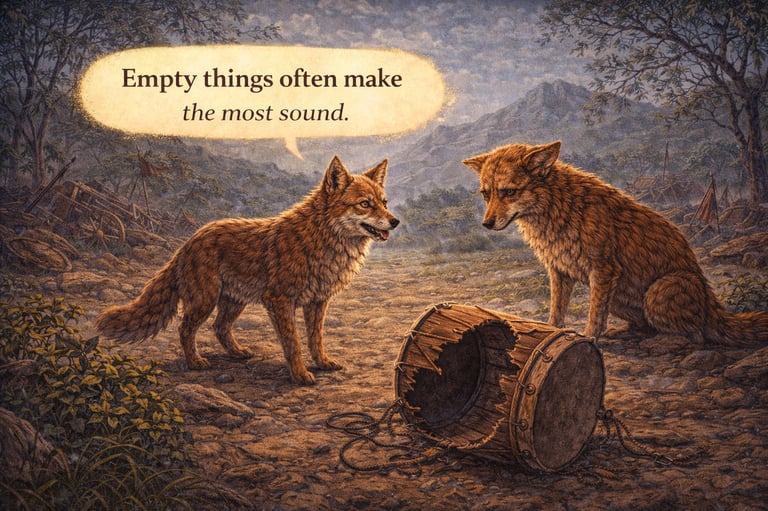
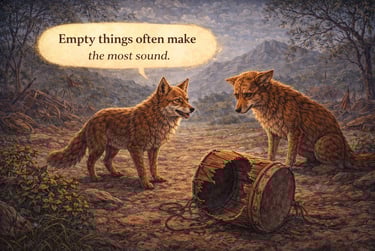
At that moment, an old fox passing by stopped and said calmly,
“Friend, loud noise does not always mean great value. Empty things often make the most sound.”
The jackal lowered his head in shame. He realized that his fear and greed had both been foolish. He had wasted an entire night trembling before an empty object and then another hour chasing false hopes.
As he walked away hungry and tired, the jackal reflected deeply.
“I allowed fear to rule my mind. I believed noise without understanding its cause.”
From that day onward, the jackal learned to question his fear, observe carefully, and think before reacting.
Moral of the Story:
Do not fear what you do not understand.
Empty things often make the most noise, while true strength remains silent.
At dawn, hunger overcame fear.
Gathering courage, the jackal slowly crept toward the source of the sound.
He discovered an old war drum hanging loosely from the branch of a tree. When the wind blew, the branches struck the drum, creating the frightening noise.
The jackal laughed nervously.
“So this was the monster I feared all night!” he said.
Curiosity replaced fear.
-----------------------------------------
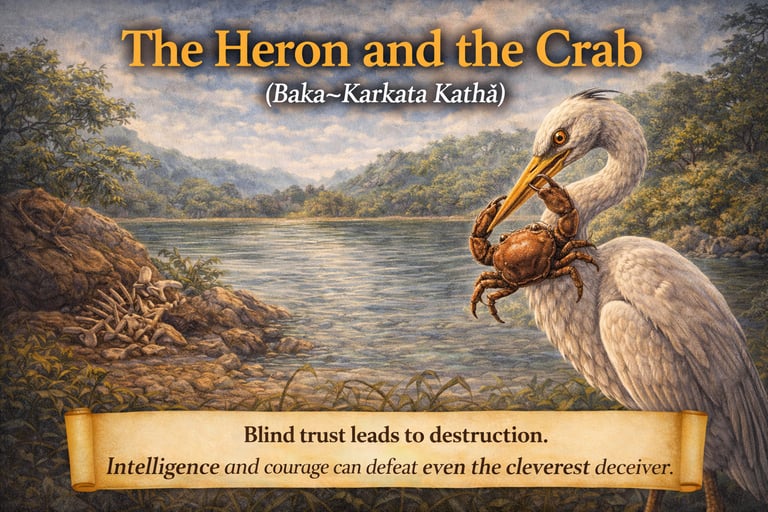
Story 7: The Heron and the Crab
(Baka–Karkaṭa Kathā- बक–कर्कट कथा)
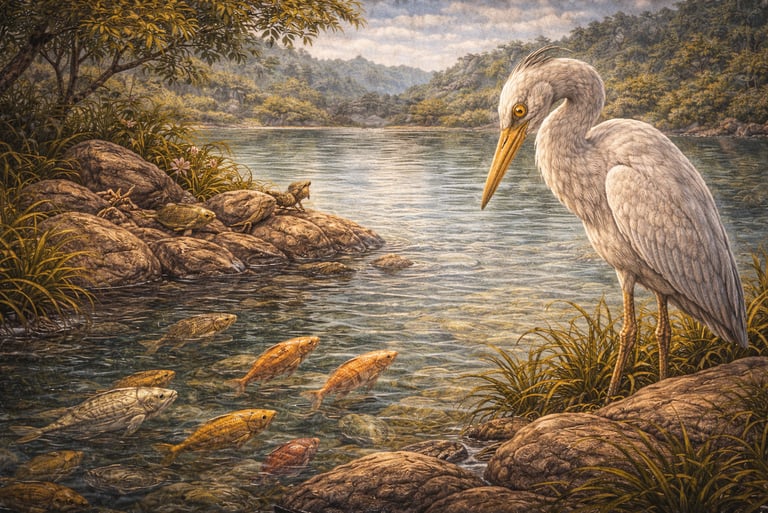
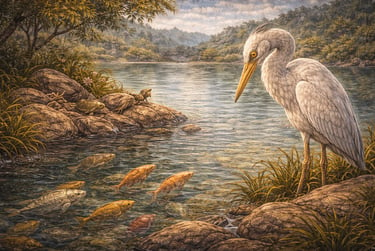
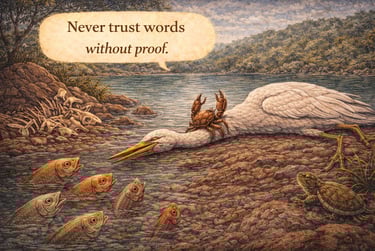
Once upon a time, beside a calm and beautiful lake surrounded by tall trees and green grass, lived many fish, frogs, turtles, and water birds. The lake was their home, and life there was peaceful and joyful.
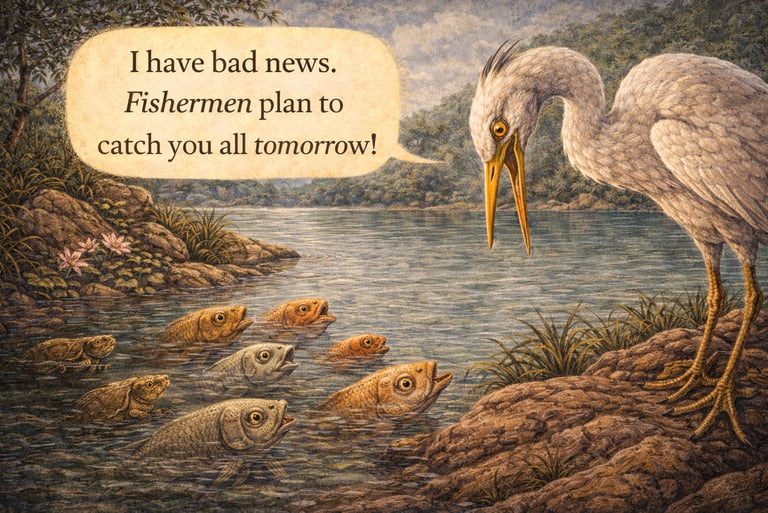
Among them lived an old heron. His feathers had turned white, his legs trembled, and his eyes looked weak.
He could no longer catch fish easily, and hunger troubled him greatly.
Yet, his mind remained sharp—and sadly, filled with deceit.
One day, the heron stood silently at the edge of the lake, pretending to be deeply sad. The fish noticed his strange behavior.
“Why are you so quiet today?” asked a fish kindly.
The heron sighed and replied in a sorrowful voice:
“My dear friends, I have terrible news. I overheard some fishermen nearby. They plan to come tomorrow and catch all of you with their nets. This lake will soon be empty.”
The fish were shocked and terrified.
“What will we do?” they cried. “Is there any way to save ourselves?”
The heron lowered his head and spoke gently,
“There is a large, safe lake not far from here, hidden deep inside the forest. If you trust me, I can carry you there—one by one.”
Fear clouded the fish’s judgment. Believing the heron’s words, they agreed. One by one, the heron carried the fish in his beak—not to another lake, but to a large rock nearby, where he ate them greedily.
Days passed, and the fish population slowly decreased. No one questioned the heron, as fear and trust had blinded them.
One day, a wise crab noticed something strange. Many fish had gone with the heron, but none had returned.
“Friend Heron,” said the crab calmly, “you have helped many fish. Please take me as well. I wish to see this safe lake.”
The heron smiled inwardly, thinking,
“This crab will be a fine meal.”
He lifted the crab and flew away.
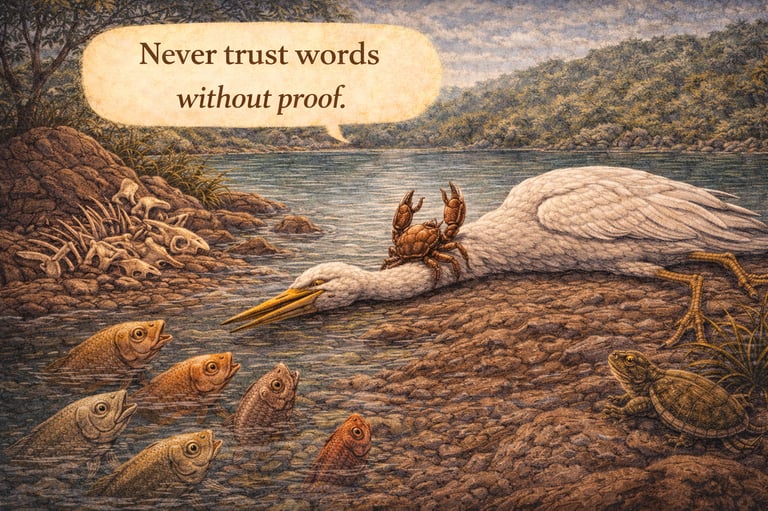
But halfway through the journey, the crab noticed piles of fish bones beneath a rock.
“Where is the lake?” the crab asked sharply.
The heron laughed cruelly and said,
“There is no lake. You are my last meal."
The crab realized the truth instantly—but unlike the fish, he did not panic. Using his strong claws, he gripped the heron’s neck tightly.
“You deceived everyone,” said the crab firmly. “Now face the result.”
With one powerful squeeze, the crab broke the heron’s neck.
The heron fell lifeless to the ground.
The crab returned safely to the lake and told everyone the truth. The creatures of the lake were filled with sorrow and relief.
“Let this be a lesson,” the crab said.
“Never trust words without proof.”
From that day onward, the lake lived in peace again—guided by wisdom, not fear.
Moral of the Story
Blind trust leads to destruction.
Intelligence and courage can defeat even the cleverest deceiver.
End of Mitra Bheda
With these stories, we come to the end of Mitra Bheda, the first and most thought-provoking section of the Panchatantra. Through animals and simple situations, these tales have taught us how friendships can be broken by lies, fear, pride, and blind trust—and how wisdom, patience, and intelligence can prevent such loss. Even today, these lessons remain deeply relevant, guiding both children and adults to think carefully, question wisely, and choose trust with awareness. As we close Mitra Bheda, we carry forward its timeless message: true wisdom lies not in strength or words, but in thoughtful understanding and right judgment.
Also read 'Panchatantra: The Timeless Indian Guide to Wisdom Through Stories': https://theorangecastle.com/panchatantra-the-timeless-indian-guide-to-wisdom-through-stories